Nestled in western Uganda, Kibale Forest National Park also known as Kibale National Park is a renowned tropical paradise and primate sanctuary crowned – Africa’s Primate Capital. The park is home to 13 primate species including the highest population of chimpanzees in the region making it one of the best safari destinations in Africa for chimpanzee trekking safari.
Kibale Forest National Park covers an area of 795 km2 featuring the most beautiful and most diversified tracts of tropical forests in the Uganda, the forest cover is predominate in the central and northern part of the park on the raised Fort Portal Plateau. The northern tip of the park is its highest standing at 1590m above sea level.
Location of Kibale Forest National Park
Kibale Forest National Park is located in the western region of Uganda about 348 km (5 hours’ drive) from Kampala and about 26km south-east of the beautiful Fort Portal Town – Uganda’s Tourism City. The park is situated close to the Serene Ndali Kasenda Crater area and it takes a half day’s drive to Queen Elizabeth National Park, Semuliki National Park, Toro-Semuliki Wildlife Reserve and Rwenzori Mountains.
The Southern region of Kibale borders Queen Elizabeth National Park and the form a 180 km long migration corridor for wildlife stretching from the remote southern sector of Queen Elizabeth National Park in “Ishasha” to “Sebitoli” in northern Kibale.
Vegetation in Kibale Forest National Park
Kibale Forest National Park comprises varied vegetation offering different varieties of wildlife habitat, ranging from the moist evergreen forest along the Fort Portal Plateau, the through the dry tropical forest, and then to the woodland and savannah along the rift valley floor. In the central part of the park, around Kanyanchu is the high forest consisting of a mixture of evergreen species being dominant. The vegetation rises to over 55m and establishes a semi-closed canopy of massive stratified tree crowns. With shade tolerant herds, a variety of ferns, shrubs and broad tolerant herbs, a variety of ferns, shrubs and broad leaved forest grasses, the undergrowth is sparse. 351 tree species have been registered in the park.
Wildlife in Kibale Forest National Park
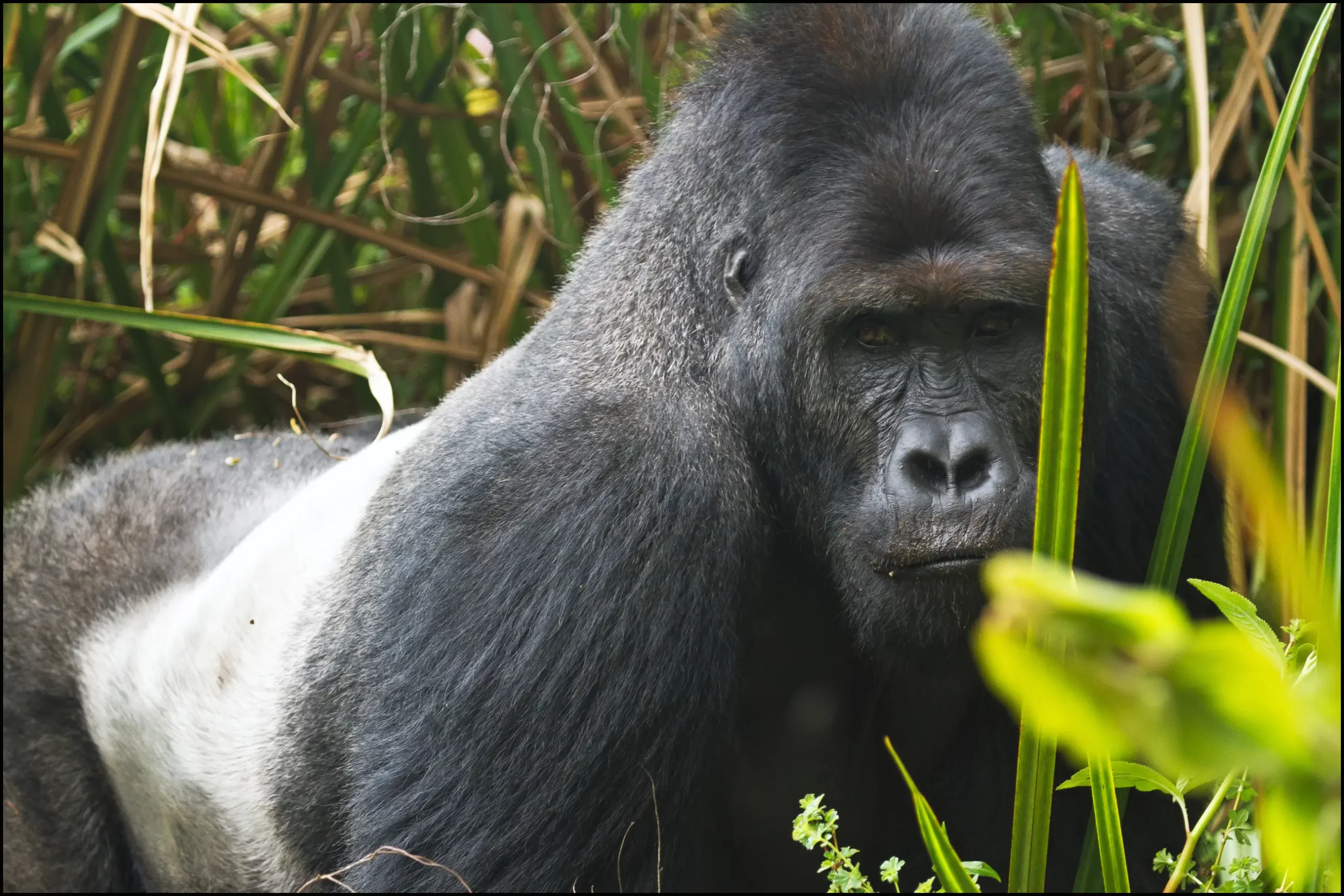
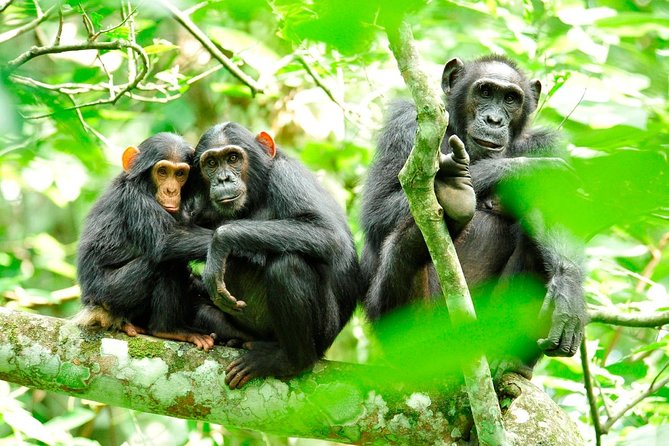
Kibale Forest national Park is home to 13 different primate species with chimpanzees being the most famous, the forest has the highest population of chimpanzee in the whole of Africa with over 1,450 individuals making it the best destination for chimpanzee trekking tour.
Other primates calling Kibale Forest home include uncommon L’Hoest’s monkeys, the biggest population of the endangered red colobus monkeys in East Africa, the black & white colobus, red tailed monkeys, blue monkeys, olive baboons, grey cheeked mangabeys, bush babies as well as potto among many others.
In addition to primates, Kibale Forest National Park is home to buffaloes, leopards, bush pigs, elephants and duikers. Several amphibians, reptile and a variety of colorful butterflies.
Birdlife in Kibale Forest National Park
With 339 species of birds, Kibale Forest National Park is one of the Important Birding Areas in Uganda. These birds include the Green-breasted Pitta – the most sought-after species, Chubb’s Cisticola, Black-capped Waxbill, Africa Shrike-flycatcher, African Black-headed Oriole, African Emerald Cuckoo, African Green-pigeon, Black-crowned Tchagra, African Wood Owl, African/Rwenzori/Abyssinian Hill-Babbler, Alpine Swift, Ashy Flycatcher, Barn Swallow, Black Bee-eater, Black Cuckoo, Black Cuckoo-shrike, Black-and-white Casqued Hornbill, Black-and-white Mannikin, Black-and-white Shrike-flycatcher, Black-billed Turaco, Black-billed Weaver, Black-faced Rufous Warbler, African Dusky Flycatcher, Black-headed Weaver, Black-necked Weaver, African Citril (Western Citril), Black-throated Apalis, Blue-shouldered Robin-chat, Blue-throated Brown Sunbird, Blue-throated Roller, African Blue Flycatcher, Bocage’ Bush-shrike, Bronze Mannikin, Zebra Waxbill, Bronze Sunbird, Brown Illadopsis, Brown-capped Weaver, Brown-chested Alethe, Brown-eared Woodpecker, Brown-headed Tchagra, African-pied Wagtail, Cameroon Sombre Greenbul, Brown-throated Wattle-eye, Yellow-billed Barbet, Afep Pigeon among others.
Uganda Safari Activities to do in Kibale Forest National Park
Chimpanzee Trekking
Chimpanzee trekking is a highlight of an Uganda Safari visit to Kibale Forest National Park, this primate adventure leaves the Kanyanchu Visitor Center at 08:00 and 14:00 daily. Though chimpanzee sighting is not guaranteed, Kibale Forest offers around 96% chances.
The chimpanzee community, whose territory centers around Kanyanchu is habituated for visits and they can be approached within a few meters. While in the forest, expect to see at least two or three other types of primates such as grey-cheeked mangabey and red tailed monkeys and various birds.
Chimpanzee are very mobile so you have to keep up with the trek, when you locate them you are allowed to one hour watching them feed, groom and play as they jump from one tree to another and take amazing pictures of them.
Chimpanzee Habituation Experience
Chimpanzee Habituation Experience is a more immersive experience perfect for dedicated chimpanzee enthusiasts or aspiring researchers seeking for a field experience. Chimpanzee habituation experience is a full day experience and intense involving staying with the chimpanzees all day with researchers and scientists observing their behavior for a period of 4 hours.
Kibale Forest Hike/Walking Trail
The Kibale Forest Walk Trail is a 12 km long trail and hike is usually done in the dry season from June to September and Mid-November to February, taking between 5 and 6 hours. This hiking tour offer you an opportunity to discover the park’s assorted habitats such as river line forest, swamp, grassland and tropical rainforest.
Birding
With over 330 bird species including 6 species native to the Albertine Rift Area like the dusky crimsonwing, black-capped apalis, blue-headed sunbird, collared apalis, red-faced woodland warbler and purple-breasted sunbird, Kibale Forest National Park is a great Uganda birding destination.
Birding excursions in Kibale Forest are led by an experienced birder who will be able to help you identify several bird species including the green breasted pitta, African pitta, black bee-eater, Abyssinian ground thrush, yellow spotted nicator, little greenbul, black-eared ground thrush, brown chested alethe, yellow rumped tinker bird, blue-breasted kingfisher, along with the crowned eagle.
The Bigodi Nature Walk – offers the best birding safari opportunities in Kibale Forest National Park, the swamp alone is home to approximately 138 bird species. It is also home to several primate species including chimpanzees, red tailed monkeys, bushbucks as well as mongoose.
Cultural Tours around Kibale
Cultural tours in Kibale Forest National Park take you to local villages neighboring the park, giving you a chance to meet the native Batooro people and the Bakinga people (immigrants from the Southwestern part of Uganda).
During these tours, you will visit a traditional village, see their traditional lifestyle of the Batoro, visit the local church, primary school, traditional healer and get a closer interaction with the locals. You will also enjoy some energetic traditional dances and songs performed by the Bakiga .
Crater Lakes Tours
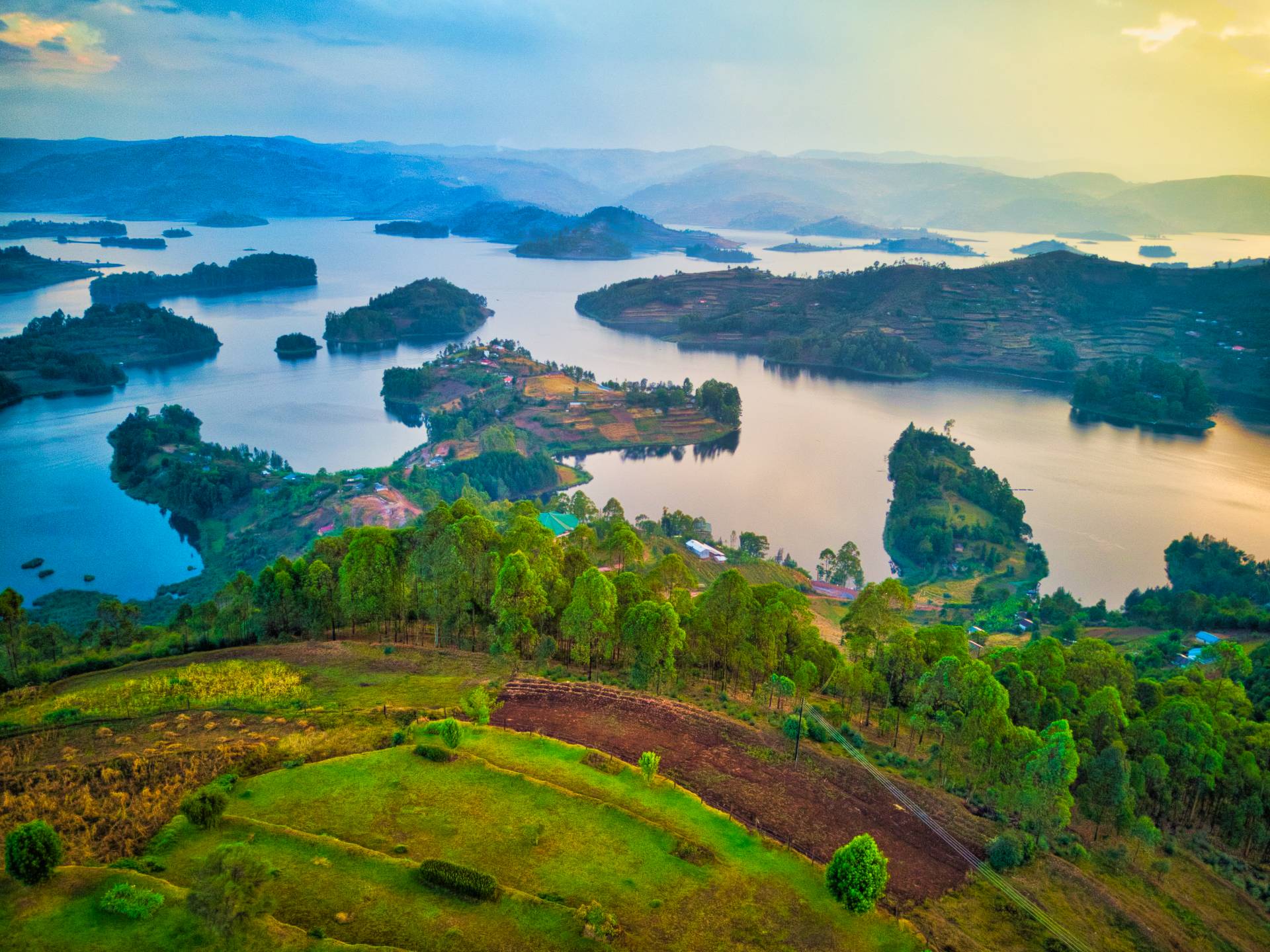
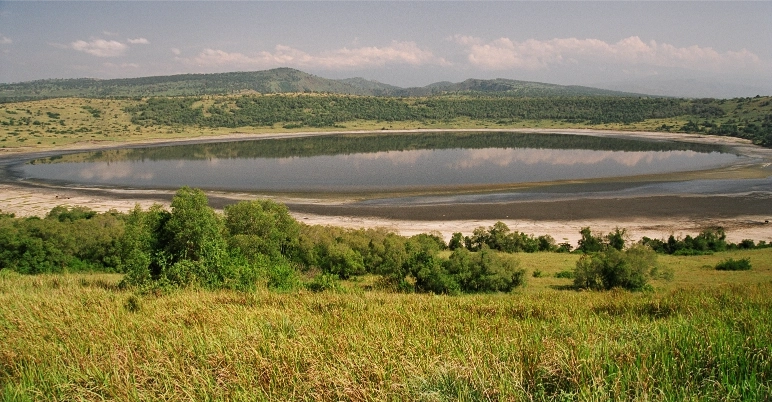
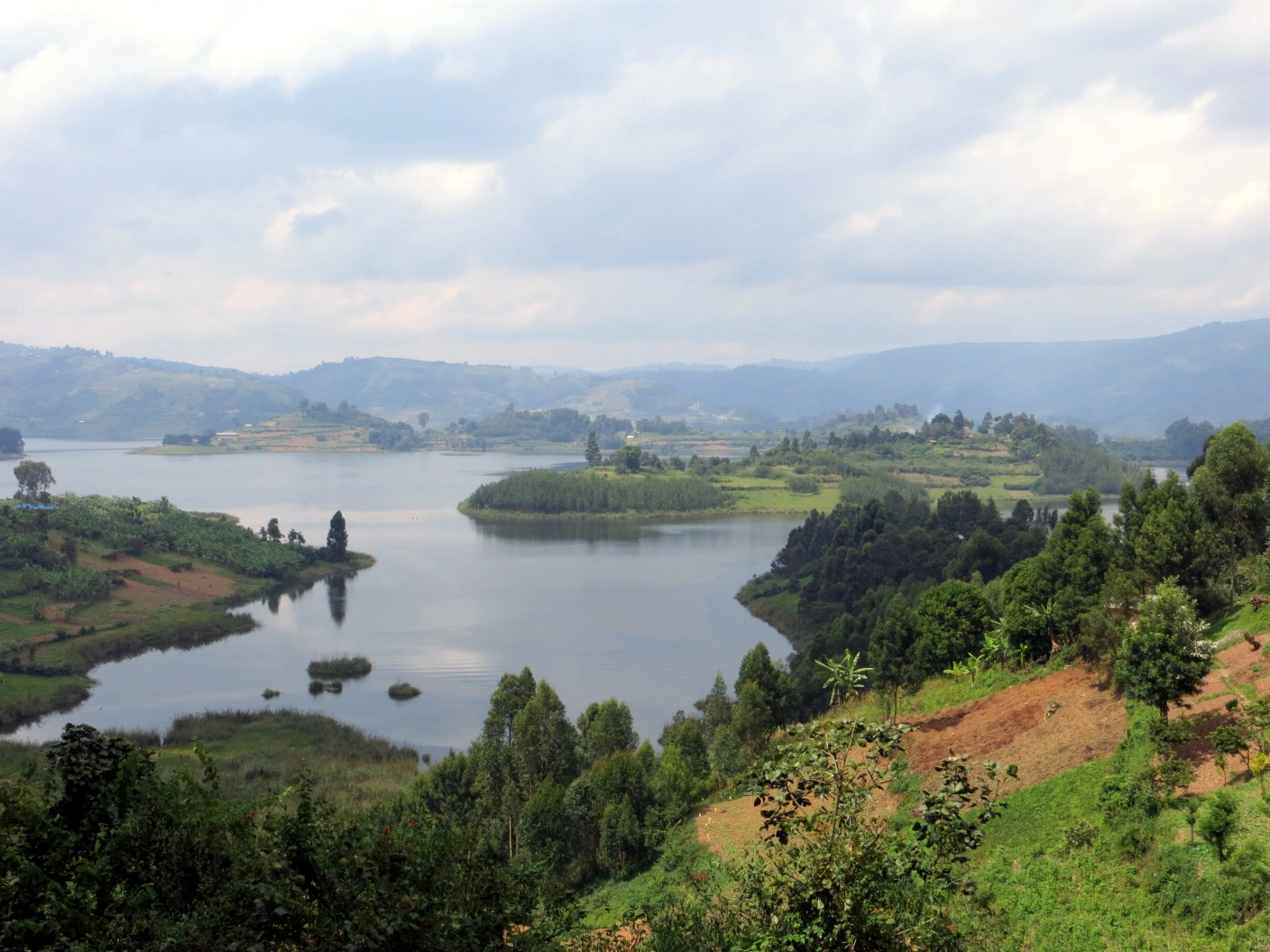
The Ndali Kasenda Area found in Fort Portal is home to more than 50 beautiful crater lakes which are surrounded by steep sided volcanoes, a visit to this picturesque area will give you an opportunity to appreciate this area’s unique landscape.
How to Get to Kibale Forest National Park
Kibale Forest National Park is accessible by road and air.
By road – there are two routes used to get to Kibale Forest National Park from Kampala, the capital of Uganda
- Kampala – Mubende – Fort Portal Route – this is the most common and shortest route to Kibale Forest National Park. The journey takes approximately 309 kilometers and takes 5-6 hours.
- Kampala – Hoima – Fort Portal Route – This route is most used by travelers combing their Uganda Safari with visits to other national parks like Murchison Falls National Park with Kibale Forest National Park. It is about 305 kilometers from Kampala to Hoima and then another 160 kilometers to Fort Portal.
By Air – this is a quicker option to get to Kibale Forest National Park, you can fly from Entebbe International Airport or Kajjansi Airfield near Kampala to Kasese Airstrip. It is a flight of about 30 minutes and from the airstrip to the park, it is a drive of 1.5 hour.
Best Time to Visit Kibale Forest National Park
Kibale Forest National Park is a year round destination meaning it can be visited at any time of the year, however the best time to visit is during the dry season when the trails are dry and passable. The dry season runs from December to February and from June to September.
The Northern region of Kibale Forest is the wettest area, receiving an average annual rainfall of approximately 1700mm mainly during March to May and September to November. Usually the climate is pleasant with an average annual temperature range of 14℃ to 27℃.
The Southern region of Kibale Forest experiences maximum temperatures and lower amounts of rainfall where the terrain drops onto the hot rift valley floor and forest provides way to open grassland.
Where to Stay in Kibale Forest National Park
There are several accommodation options in Kibale Forest National Park ranging from budget, midrange to luxury. Here is our good selection
- Ndali Lodge
- Primate Lodge, Kibale
- Turaco Treetops
- Crater Safari Lodge
- Isunga Lodge
- Chimpanzee Forest Guest House
- Kibale Forest Camp