Mount Nyiragongo is one of the most iconic and active volcanoes in the world, renowned for its massive, boiling lava lake that glows like a fiery cauldron at the summit. Located inside Virunga National Park in eastern Democratic Republic of Congo, Nyiragongo rises approximately 3,470 meters above sea level and dominates the skyline near Goma and Lake Kivu. Its near-perfect cone, rugged volcanic slopes, and world-famous lava lake make it one of Africa’s most spectacular natural wonders.
Mount Nyiragongo is part of the Virunga Volcanic Chain within the Albertine Rift. The volcano is geologically unique due to its extremely fluid lava, which can flow at unusually fast speeds because of its rare chemical composition rich in alkaline and magnesium. This characteristic has shaped Nyiragongo’s dramatic eruptions over the past century, including the notable eruptions of 1977, 2002, and 2021 which sent rivers of lava toward populated areas.
Despite its volcanic activity, Nyiragongo is a major attraction for adventure travelers who seek one of the most thrilling summit hikes in Africa. The climb to the crater rim offers breathtaking views of the surrounding mountains, forests, and lava fields, while the sight of the bubbling lava lake at night is an unforgettable lifetime experience.
Geological Importance of Mount Nyiragongo
Nyiragongo’s lava lake is one of the world’s largest and most persistent. The volcano sits in a region where tectonic forces pull the Earth’s crust apart, creating deep fissures and conduits for magma. The summit crater measures nearly 1.2 kilometers in diameter and features multiple terraces formed by previous lava lake levels. These terraces are visible when standing at the crater’s edge and represent the history of the volcano’s activity over thousands of years.
The crater floor contains the active lava lake, which fluctuates in size but has reached depths of over 200 meters. Its constant convection, bubbling, and fiery splashes create a magnificent natural spectacle best viewed at night when the crater glows red, orange, and gold.
Nyiragongo’s lower slopes are covered with montane vegetation, while higher altitudes support afro-alpine plants that thrive on volcanic soil. Past eruptions have created extensive lava flows, including vast black lava fields surrounding the volcano and reaching the outskirts of Goma.
Wildlife Around Mount Nyiragongo
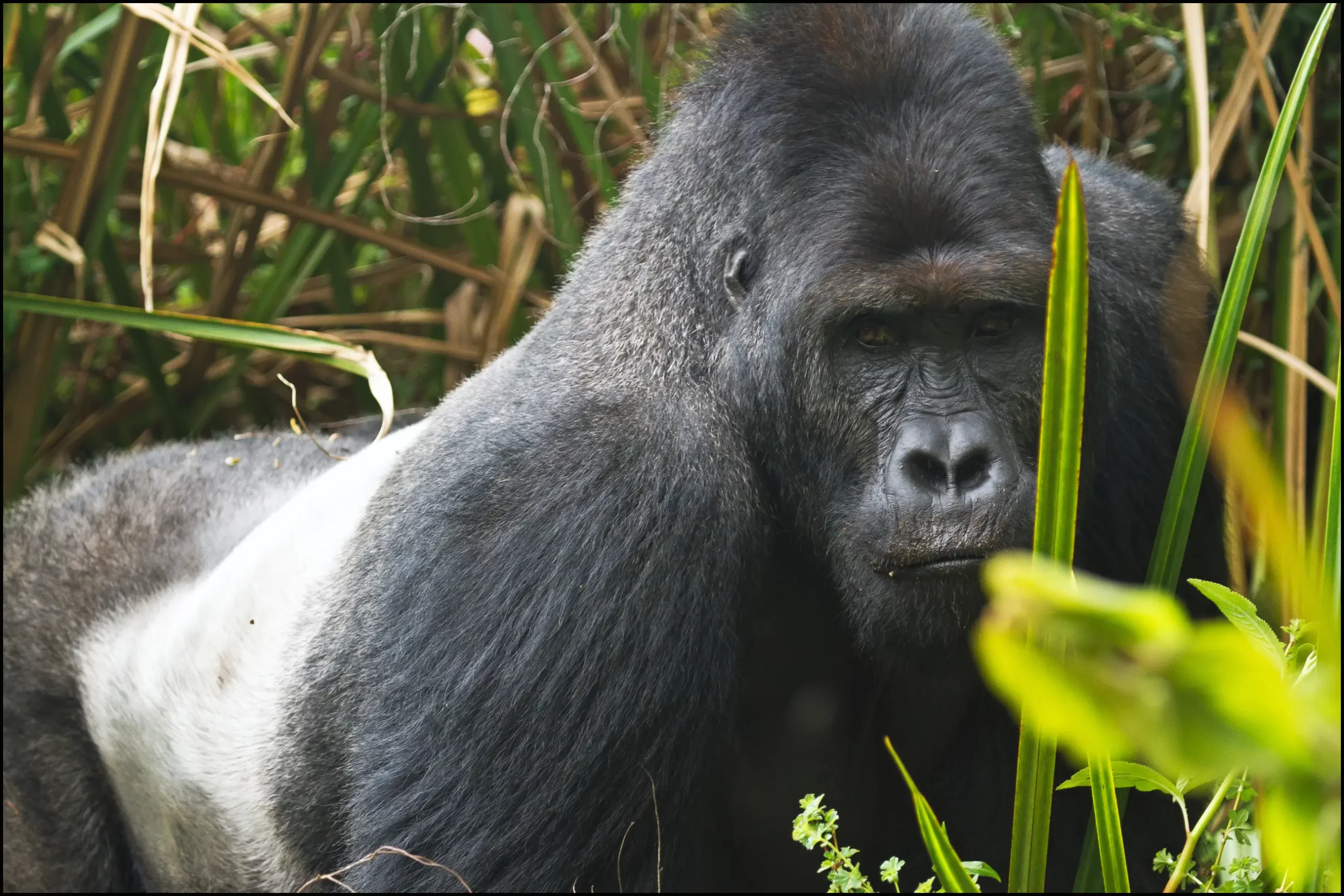
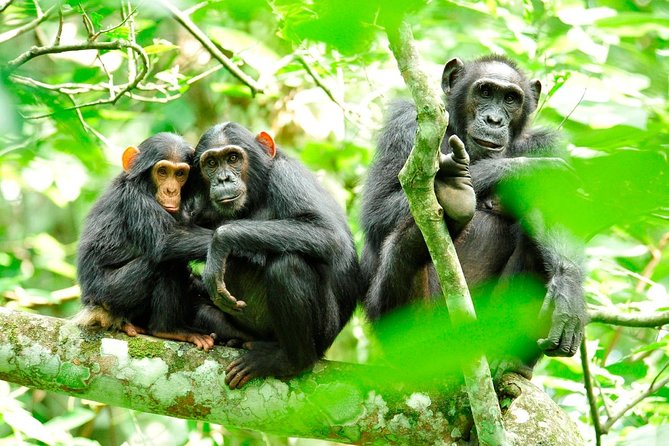
Although Nyiragongo itself is not a major wildlife hub due to its volcanic nature, it lies within the boundary of Virunga National Park, an extremely biodiverse region. Forested lower slopes provide habitat for:
- Chimpanzees
- Black-and-white colobus monkeys
- Blue monkeys
- Tree hyrax
- Small antelopes such as duikers
Birdlife is also present on the forested foothills, including turacos, sunbirds, and several Albertine Rift species. The vegetation gradually changes from montane forest to sparse afro-alpine flora as hikers ascend toward the crater.
Vegetation and Flora on Mount Nyiragongo
The fertile volcanic soils support plant life that varies with altitude. Lower elevations feature dense forest, bamboo, and Hagenia-Hypericum woodlands. As the trail climbs, vegetation becomes shorter and sparser, giving way to afro-alpine zones with giant Senecio and Lobelia species. Near the summit, the environment transitions into a harsh volcanic landscape of rugged rocks, ash, and solidified lava. Despite the extreme conditions, hardy mosses and lichens cling to cracks in the rock.
Activities to Do on Mount Nyiragongo
Nyiragongo Summit Trek
The most famous activity is the two-day summit trek. The journey begins at the Kibati ranger post, where hikers receive a briefing and are assigned guides and porters. The hike typically takes 4 to 6 hours, passing through several ecological zones, from forested foothills to volcanic plateaus. Upon reaching the crater rim, hikers are rewarded with dramatic views of the lava lake. Overnight accommodations are provided in basic summit shelters where visitors can observe the lava lake after dark, when its glow is most impressive.
Lava Field Exploration
In the lower regions near Goma, visitors can explore hardened lava fields formed during past eruptions. These landscapes offer insight into the volcano’s geological power and its impact on nearby communities.
Photography and Geological Study
Mount Nyiragongo attracts photographers, researchers, and volcanologists who come to study volcanic activity, gas emissions, lava behavior, and crater dynamics. Its accessibility makes it a unique outdoor laboratory for geological research.
Best Time to Visit Mount Nyiragongo
The best time to climb Nyiragongo is during the dry seasons:
- June to September
- December to February
These periods provide clearer weather, reduced rainfall, and more stable climbing conditions. During the rainy seasons of March to May and October to November, trails may be slippery and cloud cover can obscure crater views, but the volcano remains accessible.
Where to Stay When Visiting Mount Nyiragongo
Travelers can stay in:
- Lodges and hotels in Goma, which offer comfortable amenities before and after the trek
- Summit shelters on Nyiragongo’s crater rim during the overnight stay
- Tented camps and accommodations inside Virunga National Park (when operational), including options near the Kibati trailhead
Staying in Goma or at Mikeno Lodge allows visitors to combine Nyiragongo with gorilla trekking and other Virunga activities.
How to Get to Mount Nyiragongo
Access is primarily through the city of Goma, located on the northern shores of Lake Kivu.
Travelers typically reach Goma by:
- Flying into Goma International Airport
- Crossing by road from Gisenyi (Rwanda) through the Goma–Gisenyi border
- Traveling from Bukavu via boat or road routes
From Goma, it takes approximately 30 to 45 minutes to reach the Kibati ranger post, the starting point for Nyiragongo treks. Visitors must join officially organized treks arranged through Virunga National Park or authorized partners for safety and conservation reasons.