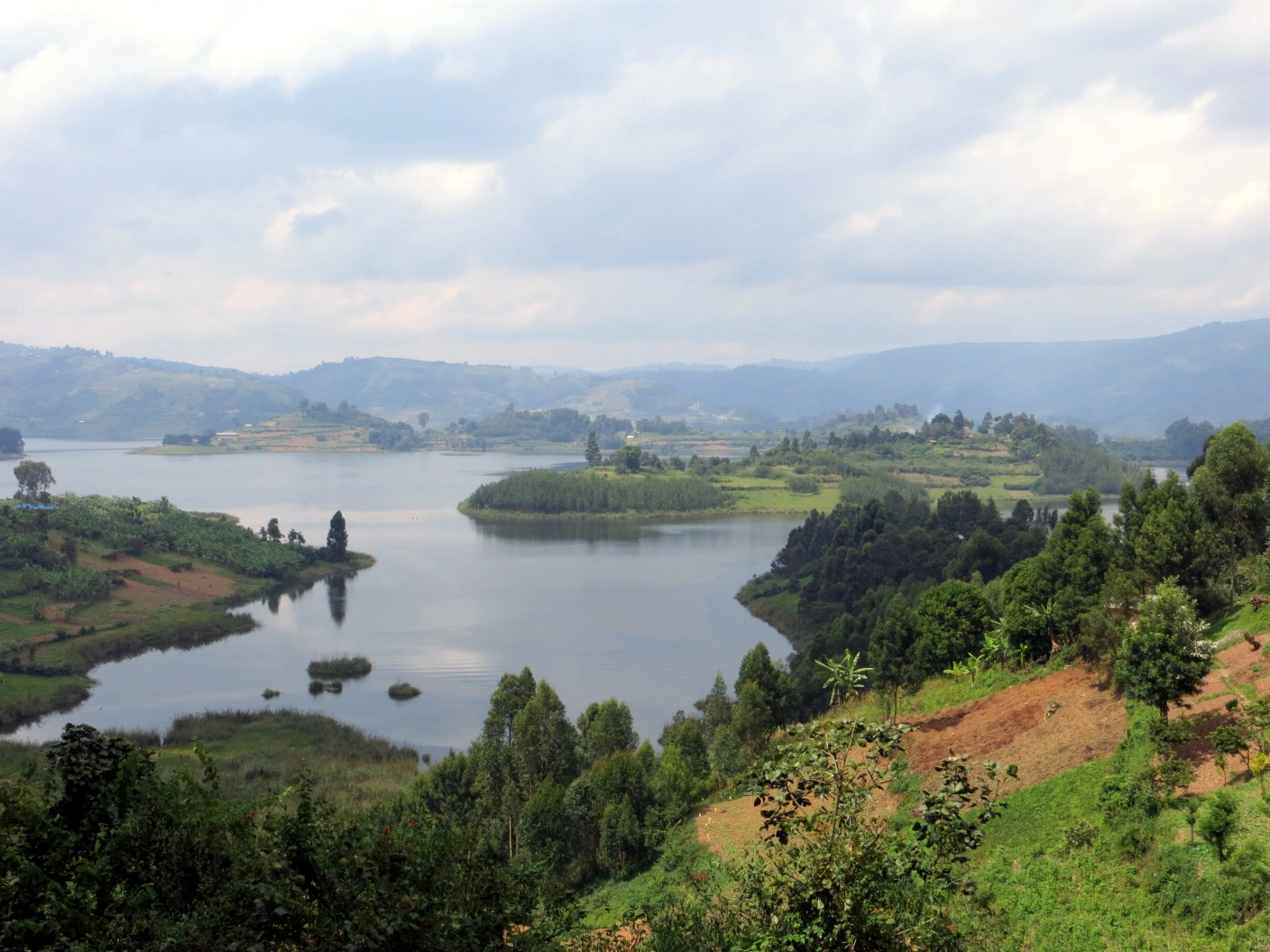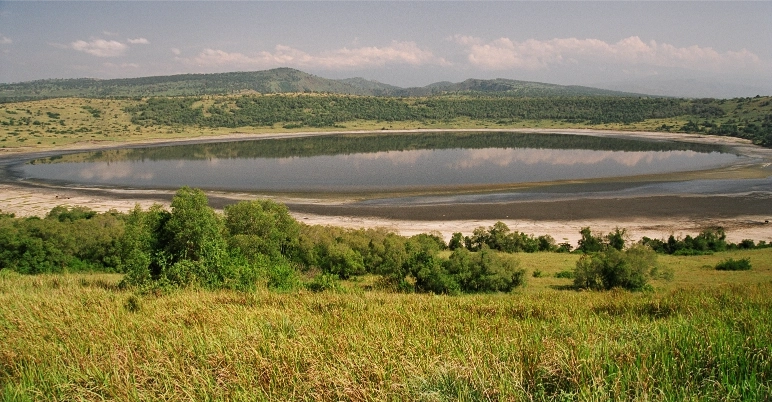
Queen Elizabeth National Park is the most popular savannah park in Uganda taking pride in its great diversity such as lakes, savannah grasslands, forests and wetlands that serve as home to the biggest concentration of wildlife in the country.
The park lies in the Western part of Uganda approximately 389 kilometers from Kampala – the capital of Uganda, stretching through districts of Kamwenge, Rukungiri, Rubirizi and Kasese. Queen Elizabeth National Park is located on the Uganda Equator, on the floor of the Great Rift Valley, in the shadow of the “Mountains of the Moon”.
Queen Elizabeth National Park covers an area of about 1,978 square kilometers, bordering Kibale Forest National Park and is an extensive of the Congo’s Virunga National Park. The park is made up of Kyambura Gorge, Maramagambo Forest, Kazinga Channel, sections of Lake Gorge and Edward.
Queen Elizabeth National Park is the second largest national park and is also the most diverse park, with options of exploring it on foot to discover its wildlife, by boat and on classic game drives.
Initially, the park was known as Kazinga National Park when it was established in 1952. The visit of Queen Elizabeth II in the early 1950’s resulted into a change in the park’s name to Queen Elizabeth National Park in her honor.
Wildlife in Queen Elizabeth National Park
Boasting over 95 mammal species, Queen Elizabeth National Park is one of the best destinations to view wildlife in Uganda. The park is home to four of the Big Five – lions, leopards, cape buffaloes and elephants.
Queen Elizabeth National Park is famously known for hosting the rare tree climbing lions found in the Ishasha Sector. Common wildlife in the park include ground dwelling lions, hippos, chimpanzees, black and white colobus monkeys, red tailed monkeys, spotted hyenas, common warthogs, giant forest hogs, Uganda Kobs, bushbucks, topis, banded mongooses, side-striped jackals among others.
Birdlife in Queen Elizabeth National Park
With over 600 bird species, Queen Elizabeth National Park is a fascinating destination for Uganda birding safaris. The park’s bird population is about 15% of Africa’s total bird species and the highest number in any protected area in East Africa.
Queen Elizabeth National Park’s lake and wetlands attract a variety of water birds including Pelicans, Flamingoes, fish eagles, storks, and more.
Common birds in Queen Elizabeth National Park include the White-faced Whistling, Spur-winged Plovers, Squacco Heron, Fish Eagle, Pink and white backed Pelicans, Long tailed Cormorants, African Jacana, Yellow backed Weavers, open-billed Stork, Water-Thick knee, Pied kingfishers, Wattled Plovers, the Black Crake, the Knob-billed Ducks, malachite, black-ramped buttonquail, Collard Pranticles, papyrus canary, verreauv’s eagle-owl, black bee-eater, squacco heron, African fish eagle, swamp fly-catcher, long-tailed cormorants, Martial Eagle, Black- rumped Buttonquail African Skimmer, White winged terns among others.
Safari Activities to do in Queen Elizabeth National Park
Game Viewing
Game viewing is the highlight Uganda Safari activity in Queen Elizabeth National Park, the park has several game viewing tracks well maintained for game viewing. The best time for game viewing is in the morning hours where are high chances of seeing elephants, buffaloes, lions and variety of antelopes.
Game drives in Queen Elizabeth National Park are done in custom 4×4 Safari Land Cruiser or Safari Van with an open rooftop, this thrilling experience is mainly done in the Kasenyi Plains. These scenic savannah plains are located on the western side of Lake George and north of the Kazinga Channel, offering good sightings of elephants, buffaloes, Uganda Kobs, bushbucks, waterbucks, spotted hyenas, hippos, Giant Forest hogs, and warthogs, lions and leopards common at sunrise and sunset.
Kazinga Channel Boat Safari
The Kazinga Channel Boat safari is one of the most memorable safari activity, usually this activity begins at 2 pm at the Mweya Jetty giving you a chance to see hundreds of hippos, buffaloes, elephants and Nile crocodiles. Expect to see over 100 species of water birds including African skimmer, pink – backed and Great White Pelican, African Openbill, Saddle-billed Stork and African Wattled Lapwing among others.
Lion Tracking Experience
Lion Tracking Experience is one of the most incredible wildlife experience offered in Uganda’s Queen Elizabeth National Park. This activity is operated by the Uganda Wildlife Authority and Uganda Carnivore Program (UCP), an organization based in Queen Elizabeth National Park and is dedicated to research and conservation of large carnivores of Uganda, particularly lions, hyenas and leopards.
Birding
Queen Elizabeth National Park is an incredible destination for birding in Uganda, the park is home to over 600 bird species which is about 15% of Africa’s total bird species and reputedly the most of any protected area in East Africa.
During birding safari in Queen Elizabeth National Park, expect to see several colorful bird species including Pied kingfishers, Wattled Plovers, the Black Crake, the Knob-billed Ducks, malachite, black-ramped buttonquail, Collard Pranticles, papyrus canary, verreauv’s eagle-owl, black bee-eater, squacco heron, African fish eagle, swamp fly-catcher, long-tailed cormorants, Martial Eagle, Black- rumped Buttonquail African Skimmer, White winged terns among others.
The best birding spots in Queen Elizabeth National Park are Kasenyi Plains, Kazinga Channel, Katuunguru Bridge Area, Maramagambo Forest, Katwe Area, Ishasha Sector and Mweya Peninsular.
Chimpanzee Trekking in Kyambura Gorge
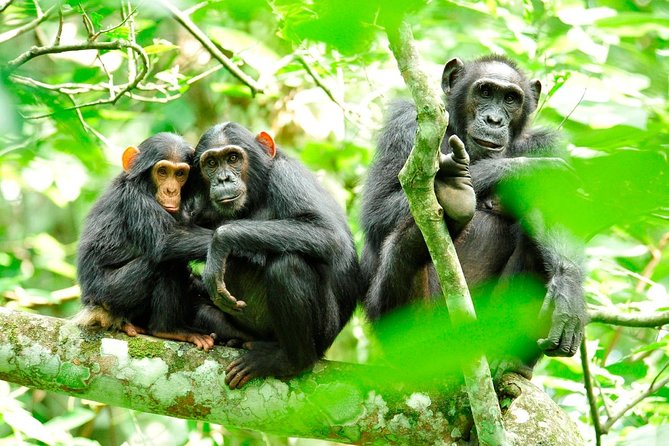
The Kyambura Gorge in Queen Elizabeth National Park is home to primates including chimpanzees and is where chimpanzee trekking is done. Kyambura Gorge is home to around 30 Chimpanzees and is considered the 4th best place for chimpanzee trekking in Uganda after Kibale Forest National Park, Kalinzu Forest and Budongo Forest.
Chimpanzee trekking in Kyambura Gorge departs two times a day, trackers leave in 2 groups of up to 4 visitors each at 08:00 or 13:00. The trek takes about 3 hours, but this gently depends on where you located that day and how quickly you move. You are allowed to spend only one in their presence watching them groom, feed and play.
How to Get to Queen Elizabeth National Park
Queen Elizabeth National Park is found in western Uganda, roughly 250 miles from Kampala, the capital. The Park can be accessed either by road or air.
By Road – Driving from Kampala takes at least eight hours along a tarmac road, there are two routes from Kampala, via Mbarara to the east of the park covering a distance of 250 miles, or from Fort Portal to the north – slightly longer at 260 miles.
By Air – There are domestic charter flights from both Entebbe International Airport and Kajjansi Airfield near Kampala to Kasese, Mweya and Ishasha Airstrips which serve the Queen Elizabeth National Park. The flight time is generally an hour or two.
Best Time to visit Queen Elizabeth National Park
Queen Elizabeth National Park is a year round destination, however the best time to visit is from January to February as well as June to September. The Peak Season in the park and Uganda as well is from June to September, so expect accommodations to fill out quickly.
The rainy season months of August to December as well as March to May are perfect time for tourists interested in enjoying low budget rates and excellent for birders as migratory bird species arrive in the park.
Where to stay in Queen Elizabeth National Park
In Queen Elizabeth National Park there is a range of accommodation options; lodges and camps ranging from budget, midrange to luxury facilities. They include Pumba safari lodge, Queen Elizabeth Safari Lodge, Savannah Resort Hotel, Ishasha Jungle Lodge, Enganzi Lodge, Park View Lodge, Mweya Safari Lodge and Kasenyi Safari Lodge.